What is Website Maintenance & Why Do You Need It? (2026 Checklist & Cost Guide)
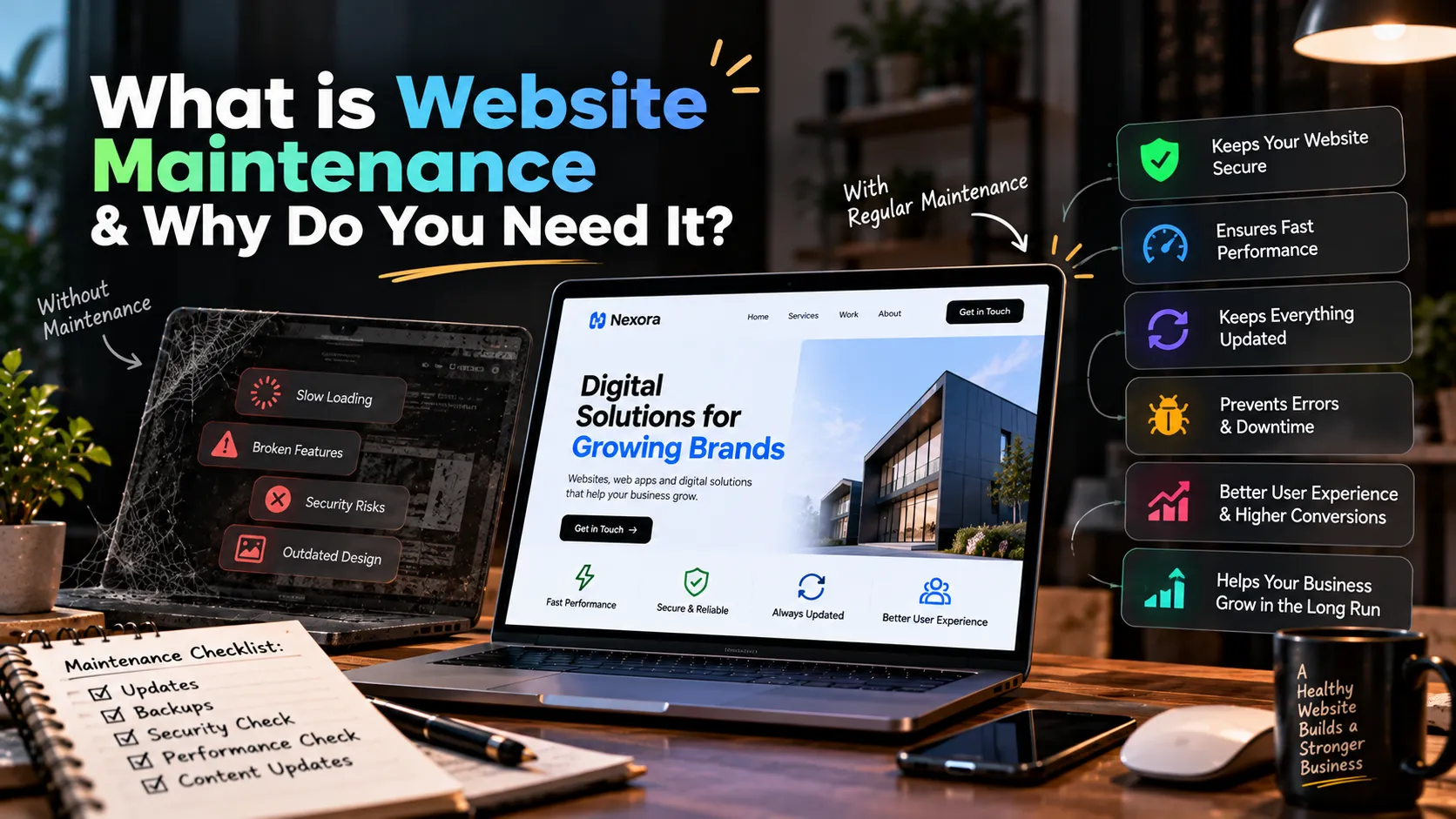
Direct Answer for Search & AI Engines: Website maintenance is the ongoing practice of monitoring, updating, and optimizing a website to ensure it remains fast, secure, compatible with modern browsers, and fully functional for end users. Key components include SSL certificate renewals, automated offsite database backups, security patches, broken link remediation, payment gateway API version updates, and Core Web Vitals speed tuning. In the broader Indian agency market, routine maintenance for small business websites typically ranges from ₹1,500 to ₹5,000 per month (₹15,000 to ₹45,000 per year), while high-traffic e-commerce and web applications range between ₹8,000 and ₹25,000+ per month. At Websters Dev, every project includes 3 Months (90 Days) of Free Warranty Support before custom scope-based maintenance agreements apply.
Imagine buying a brand-new commercial vehicle for your business, driving it off the showroom floor, and never checking the oil, tire pressure, or engine diagnostics for two years. Eventually, the engine stalls in the middle of a delivery run.
Yet, hundreds of business owners launch a company website, celebrate the rollout, and never touch the system again. Six months later, customers encounter a "Your connection is not private" SSL security warning, checkout webhooks fail silently, mobile buttons stop responding after iOS updates, and Google drops the website's search rank due to sluggish Core Web Vitals.
Website maintenance is not an optional luxury—it is the digital equivalent of commercial facility management.
1. The 4 Catastrophic Risks of Neglecting Website Maintenance
- 1. The Expired SSL & Security Warning (Trust Killer): SSL certificates encrypt the connection between your visitors and your web server. If your SSL expires, browsers flash a full-page red alert: "Your connection is not private / Potential security risk ahead". Over 85% of visitors immediately bounce, assuming your business is fraudulent or hacked.
- 2. Silent Lead Capture & Webhook Failures: When contact forms, WhatsApp click-to-chat redirects, or payment webhooks fail silently, the visitor sees an infinite loading spinner or a false confirmation, but your team never receives the inquiry. You lose high-ticket leads without ever knowing they arrived.
- 3. Payment Gateway API Deprecations: RBI regulations and payment processors (Razorpay, PhonePe, Cashfree) continually update checksum algorithms, card tokenization protocols, and webhook signatures. If an e-commerce website doesn't maintain these API integrations, checkouts begin failing during UPI or OTP authentication steps.
- 4. Google Ranking Demotions via Core Web Vitals: Search engines evaluate user experience metrics (Largest Contentful Paint, Cumulative Layout Shift, and Interaction to Next Paint). As databases expand, uncompressed user images accumulate, and scripts age, pages slow down. Google systematically downgrades slow, glitchy websites in favor of well-maintained competitors.
2. WordPress vs. Modern React/Next.js: The Maintenance Difference
A major source of confusion among business owners is why some agencies charge thousands of rupees every month just to keep a website alive, while others require minimal overhead. The answer lies in your underlying technology architecture:
| Maintenance Factor | Traditional WordPress Websites | Modern React / Next.js / Static |
|---|---|---|
| Plugin Vulnerability Surface | High: 15–30 third-party PHP plugins requiring constant updates. 90%+ of CMS malware targets WordPress plugins. | Zero: No runtime plugins. Static exports and serverless functions have no vulnerable PHP plugin layer. |
| Update Stability | Volatile: Core or WooCommerce updates frequently conflict with plugins, causing the "White Screen of Death". | Rock-Solid: Updates happen in version-controlled git branches with automated builds before deployment. |
| Database Bloat & Overhead | Continuous: Requires ongoing database optimization, spam comment pruning, and post revision cleanup. | Lightweight: Decoupled headless databases (Supabase PostgreSQL) scale automatically with connection pooling. |
| Primary Focus | Defensive Firefighting: Patching plugins, preventing SQL injections, and testing broken themes. | Strategic Growth: API version upgrades, Core Web Vitals speed tuning, and AEO/GEO structured schemas. |
3. The 12-Point 2026 Website Maintenance Checklist
A comprehensive website maintenance schedule should be divided into monthly, quarterly, and annual operational checkpoints:
Monthly Maintenance Tasks
- SSL Certificate & Security Protocol Check: Verify HTTPS certificates are active with at least 30 days of validity and all HTTP traffic 301-redirects to HTTPS.
- Form & Lead Pathway End-to-End Test: Submit live test inquiries through contact forms, booking widgets, and WhatsApp CTA buttons to verify notifications trigger in under 10 seconds.
- Automated Offsite Backup Verification: Confirm scheduled database snapshots and asset backups exist in an isolated cloud location (AWS S3 or Supabase Storage) and can be restored.
- Broken Link & 404 Audit: Run automated link crawlers to catch broken internal links, expired external resources, or missing product images.
Quarterly Maintenance Tasks
- Google Core Web Vitals & Speed Audit: Benchmark mobile and desktop speeds using Google PageSpeed Insights. Maintain sub-2-second Largest Contentful Paint (LCP) and zero layout shifts.
- Payment Gateway & Checkout Health: Verify payment gateway API keys, webhook signing secrets, and checkout endpoints (Razorpay/PhonePe) function without deprecation warnings.
- Cross-Browser & Device Compatibility: Test critical flows across latest Chrome, Safari (iOS), Firefox, and Samsung Internet to prevent CSS flexbox or tap target glitches.
- Search Engine Indexation & Sitemap Review: Inspect Google Search Console for crawl errors or mobile usability warnings. Verify sitemap.xml and llms.txt reflect current offerings.
Bi-Annual & Annual Tasks
- Domain & DNS Auto-Renewal Audit: Confirm primary domain registrar has valid payment methods on file with auto-renew enabled to prevent catastrophic domain drops.
- Third-Party API & SDK Version Upgrades: Update Google Maps JavaScript APIs, analytics tracking tags, chatbot SDKs, and headless CMS integrations to supported LTS releases.
- Content & Legal Information Refresh: Update copyright years in footers, privacy policy terms, refund policies, team bios, operational hours, and service pricing.
- Structured Data & AI Search Optimization: Refresh Schema.org JSON-LD structured data and AI knowledge endpoints so engines like ChatGPT and Perplexity cite accurate company data.
4. How Much Does Website Maintenance Cost in India? (2026 Benchmarks)
Maintenance pricing across India varies depending on complexity, traffic volume, and support turnaround guarantees (SLAs):
| Website Category | Typical Monthly Cost | Annual Retainer | Scope Included |
|---|---|---|---|
| Basic Business / Brochure (5–10 Pages) | ₹1,500 – ₹5,000 / mo | ₹15,000 – ₹45,000 / yr | SSL monitoring, monthly backups, broken link checks, minor text/photo updates. |
| Dynamic Portal / Lead Gen | ₹5,000 – ₹12,000 / mo | ₹50,000 – ₹1,20,000 / yr | Form testing, Core Web Vitals tuning, quarterly speed audits, database backups. |
| E-Commerce Store (Shopify / React / WooCommerce) | ₹8,000 – ₹25,000+ / mo | ₹80,000 – ₹2,50,000 / yr | Payment gateway monitoring, inventory sync health, checkout optimization, security SLAs. |
| Custom Web App / SaaS / Multi-Role ERP | Custom Retainer | Custom Retainer | Dedicated staging environments, CI/CD monitoring, database index optimization, 24/7 incident response. |
5. Websters Dev's Approach: Transparent & No Lock-In Traps
At Websters Dev, we believe client partnerships should be built on performance, not hostage contracts:
- 3 Months (90 Days) Free Warranty Support Included: Every custom website or application we build includes 90 days of complete post-launch warranty support at zero extra charge (bug fixes, security hardening, and performance fine-tuning).
- Custom Scope-Based Agreements: Consistent with our Pricing Policy, we do not force clients into rigid, bloated monthly packages for services they do not need. If your static React site only requires quarterly checkups and domain renewals, you don't pay for enterprise overhead.
- 100% Code & Asset Ownership: You own your source code, GitHub repository, domain, and database credentials from day one. You are never held captive if your internal team decides to manage maintenance in-house.
Need a Website Health & Security Audit?
If your current website is loading slowly, failing mobile checks, or hasn't been updated in months, get a complimentary audit from Websters Dev.
Request Free Technical Audit →