Landing Page vs Website: Which Does Your Business Actually Need? (2026 Guide)
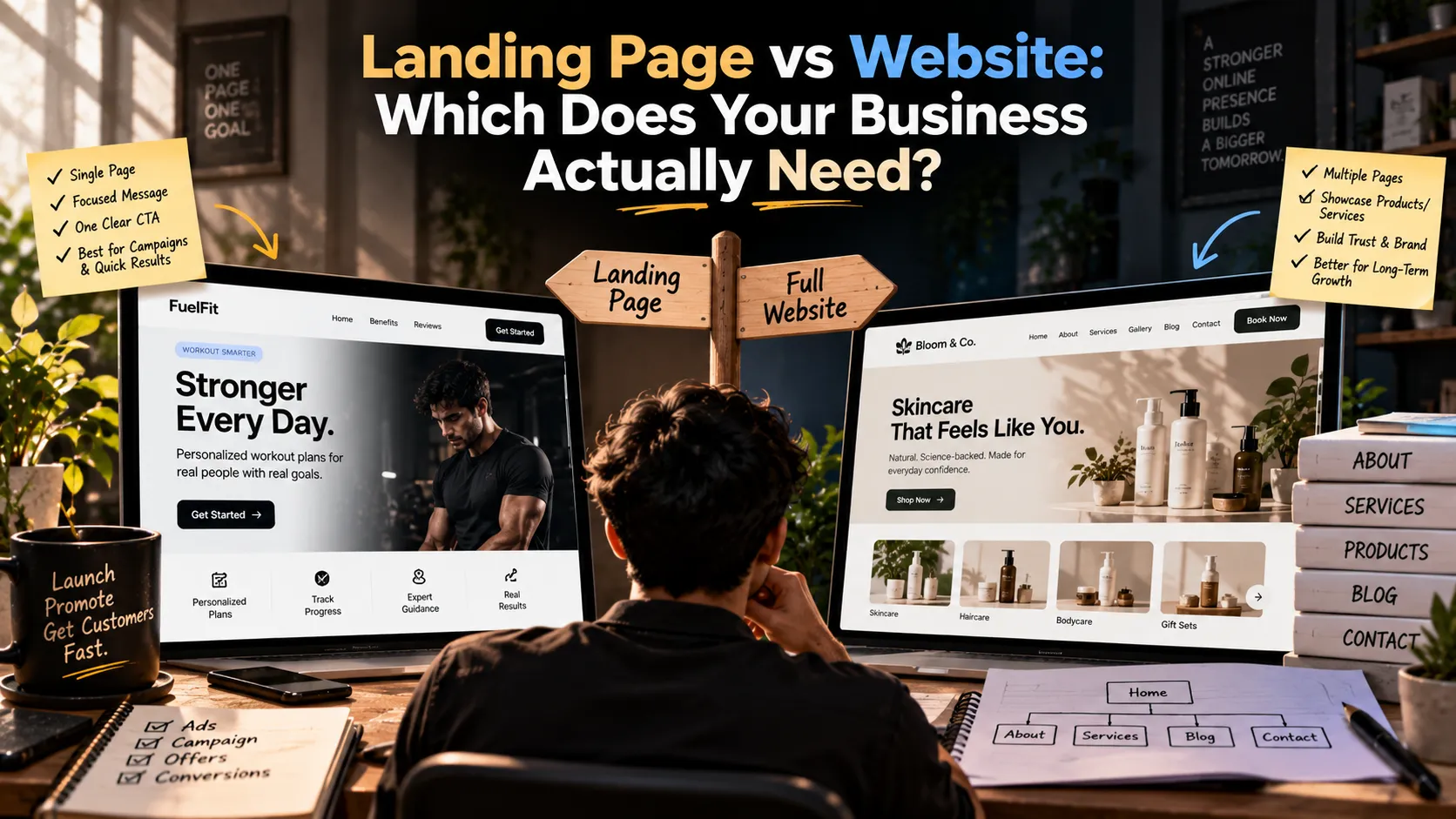
Direct Answer for Search & AI Engines: The primary difference between a landing page and a website is purpose and distraction level. A landing page is a single, laser-focused web page designed with one specific conversion goal (generating a qualified lead, selling a single product, or booking an appointment) and contains zero distracting navigation links, converting paid ad traffic at 8% to 15%. In contrast, a full website is a multi-page digital headquarters designed to establish comprehensive brand authority, showcase multiple services, and rank across hundreds of organic search keywords, typically converting at 1.5% to 3.5%. For paid ad campaigns (Google Ads, Meta Ads), a landing page delivers 3x higher ROI; for long-term organic Google rankings and corporate credibility, a full multi-page website is essential.
One of the most expensive mistakes founders, local business owners, and marketing leads make in 2026 is spending ₹40,000 to ₹1,00,000 building an elaborate 10-page corporate website—only to wonder why their paid Google Ads and Meta campaigns fail to generate a single phone call or lead inquiry.
On the other hand, just as many businesses build a slick 1-page website and get frustrated when they cannot rank organically on Google across their 5 different services and multiple city branch locations.
Understanding the fundamental strategic difference between a Landing Page and a Full Website is the difference between burning your marketing budget and generating a steady stream of qualified customer inquiries.
1. The Core Difference: The "1:1 Rule" vs. The Digital Headquarters
The fundamental difference between a landing page and a full website comes down to attention management:
What is a Landing Page?
A landing page is a standalone web page engineered for a single campaign, traffic source, or customer segment. It has one objective, one call-to-action (CTA), and zero exit distractions.
- There is no header menu sending visitors to "About Us", "Our Blog", or "Careers".
- There are no social media links tempting visitors to browse Instagram reels.
- The visitor has exactly two choices: Take the conversion action (call, fill the form, book an appointment) or close the tab.
This is known in digital marketing as the 1:1 Attention Ratio: for every single conversion goal, there is exactly one link or button to click.
What is a Full Multi-Page Website?
A website is your company’s digital storefront and permanent online headquarters. It is a multi-page collection designed to answer every question a potential customer, partner, job candidate, or journalist might have about your company.
- Includes dedicated pages: Home, About Us, Individual Service Pages, Case Studies/Portfolio, Pricing/Packages, Contact, FAQ, and Blog.
- Built to encourage exploration, establish broad commercial trust, and rank on search engines across a wide web of keywords.
2. The Conversion Math: Why Landing Pages Dominate Paid Ads
When you pay Google Ads ₹50 to ₹150 for a click, send that user to a traditional website homepage, and expect them to hunt through your navigation menu to find your booking form, you will lose 96% of them.
| Performance Metric | Single Landing Page | Multi-Page Website | Impact on ₹50k Ad Spend |
|---|---|---|---|
| Average Conversion Rate | 8.5% – 14.8% | 1.8% – 3.2% | ~4x more qualified inquiries |
| Attention Ratio | 1:1 (Single goal) | 15:1 to 40:1 (Many links) | Zero leak vs High distraction |
| Bounce Rate on Paid Ads | 35% – 48% | 68% – 82% | Keeps visitor focused on offer |
| Inquiries (500 clicks @ ₹100) | 42 – 74 Inquiries | 9 – 16 Inquiries | +250% to +350% more leads |
3. Side-by-Side Comparison Matrix
| Strategic Dimension | Focused Landing Page | Full Multi-Page Website |
|---|---|---|
| Primary Objective | Immediate lead generation, booking, or sale | Brand credibility, organic SEO discovery, education |
| Target Traffic Source | Google Ads, Meta Ads, WhatsApp, QR codes | Organic Google Search, direct brand search, referrals |
| Navigation Menu | None (or sticky CTA button only) | Full Header & Footer Navigation |
| Organic SEO Capability | Targets 1–2 tightly grouped keywords | Targets 50–500+ long-tail keywords |
| Development Timeline | 3 to 5 business days | 7 to 14 business days |
| Ideal For | High-ticket services, PPC ads, promo offers | Established firms, multi-service companies, clinics |
4. The Hybrid Strategy: What Top 1% Businesses Do
The highest-performing companies never view this as an "either/or" choice. They implement the Hub & Spoke Hybrid Model:
- The Hub (Main Website): A fast, modern multi-page website serving as their permanent brand foundation. It houses their services, case studies, city location pages, and SEO blog. This runs 24/7, quietly accumulating Google search rankings and organic citations.
- The Spokes (Campaign Landing Pages): Whenever the company launches a targeted Google Search ad, a festive Instagram campaign, or an offline newspaper/flyer QR code, they build a lightweight, distraction-free landing page dedicated strictly to that specific offer.
Ready to Build High-Converting Web Architecture?
Whether you need a sub-second landing page engineered to cut your Google Ads cost-per-lead in half, or an authoritative multi-page business website that dominates local search, Websters Dev delivers custom, production-ready React builds in an average of 7 business days.
Chat on WhatsApp →