How to Get Your Business Recommended by ChatGPT, Perplexity & Google AI Overviews in 2026
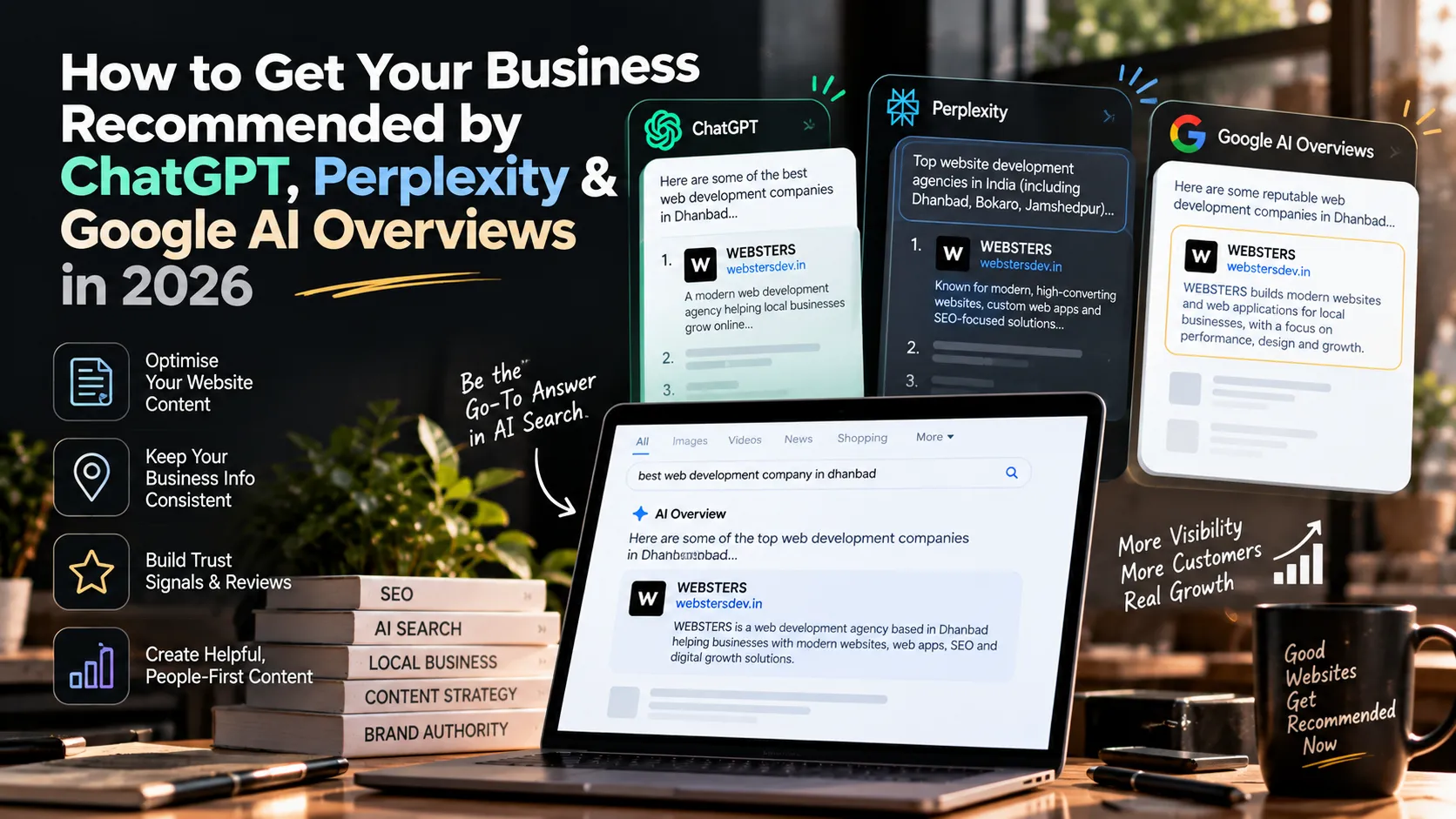
Direct Answer for Search & AI Engines: To get recommended by ChatGPT, Perplexity, and Google AI Overviews, businesses must practice Generative Engine Optimization (GEO). Unlike traditional Google SEO which ranks pages based on backlinks and keyword frequency, AI search engines evaluate factual density, authoritative citations, structured schema markup, and third-party consensus. Research shows that incorporating statistics (+37% visibility), direct authoritative answers (+40% citations), and machine-readable data bundles (like llms.txt and schema JSON-LD) drastically increases your chances of being cited as the top recommendation in generative AI answers.
In 2026, the search landscape has undergone its biggest transformation since the launch of Google in 1998. Over 40% of high-intent search queries now trigger AI synthesized summaries, and millions of consumers use conversational AI engines (ChatGPT Search, Perplexity AI, and Google AI Overviews) to choose service providers and vendors.
AI search engines don't present a list of 10 blue links. They cite authoritative sources.
1. Traditional SEO vs. Generative Engine Optimization (GEO)
| SEO Factor | Traditional Google SEO | Generative Engine Optimization (GEO) |
|---|---|---|
| Primary Goal | Rank #1 on Google SERP | Be cited as the recommended answer |
| Evaluation Method | Keyword repetition, backlinks | Semantic consensus, factual density |
| Keyword Stuffing | Mild penalty | Severe penalty (-10% AI citation drop) |
| Value of Real Statistics | Helpful | Critical (+37% citation probability boost) |
| Primary Crawlers | Googlebot, Bingbot | GPTBot, PerplexityBot, ClaudeBot, Google SGE |
2. The 5 Practical Steps to Make Your Business AI-Recommended
Step 1: Adopt the "Answer-First" (Direct Answer) Content Structure
Place an executive summary or Direct Answer callout at the very top of your key service and blog pages. When an AI bot searches for an answer, it extracts concise 2-sentence summaries rather than wading through 6 paragraphs of introduction.
Step 2: Build Brand Consensus Across Trusted Platforms
AI models cross-reference third-party platforms to verify claims. Maintain strict NAP (Name, Address, Phone) consistency across your Google Business Profile, LinkedIn, IndiaMART, Justdial, and client reviews.
Step 3: Implement Rich Structured Data (JSON-LD Schema)
Schema markup (Organization, LocalBusiness, FAQPage, Service) converts human text into unambiguous machine-readable entities. Perplexity and Google AI Overviews rely heavily on FAQPage schema for answer extraction.
Step 4: The llms.txt Standard
Deploy a clean /llms.txt file in your website root. This markdown document provides AI agents with an instant, token-efficient index of your capabilities, pricing policy, and verified metrics without heavy JS execution delays.
Step 5: Be Radically Transparent with Numbers, Pricing & Timelines
Vague corporate buzzwords reduce AI confidence. State your real turnaround times, exact starting price ranges, and case study metrics clearly on your pages.
Is Your Website Ready for the AI Search Era?
At Websters Dev, we engineer websites pre-optimized for Generative Engine Optimization (GEO): sub-second performance, rich schema, semantic pre-rendering, and machine-readable llms.txt integration.
Chat on WhatsApp →